
This has been a tough year for Floridians.
Families right now are bracing for the impact of unprecedented cuts to health care and food assistance — cuts that were included in the federal reconciliation bill, H.R. 1 — against the backdrop of increased living costs and high inflation.
Our purpose at FPI has always been to support those policies that help communities and families here thrive. We accomplish this through researching state and federal policies, publishing our findings, and then disseminating them widely.
As we enter 2026, we recommit ourselves to working alongside our partners to remove barriers to economic mobility embedded in our laws and regulations.
P.S. In case you missed it, in 2024, FPI celebrated 10 years of policy impact! See our 10 years of impact and check out the video we made to mark the occasion here: https://www.youtube.com/watch?v=Pokky2w--Hs
Sincerely,
Sadaf Knight
CEO
One of FPI’s longest standing priorities is reforming the state’s occupational licensing system for returning citizens, as Floridians who have been incarcerated face numerous roadblocks upon returning home from prison.
Over the past several years, FPI has worked diligently to spread awareness on the need to reform Florida’s occupational licensing system for people who have been incarcerated.
FPI found that while the state’s Correctional Education Program had awarded 36,689 certificates and industry-recognized credentials over the last four years, the certificates were largely only valid while the people receiving them were incarcerated.
In May 2025, legislation (SB 472) championed by FPI was signed into law — the measure aims to help ensure that credits earned from prison-based classes are recognized and counted toward professional licensing requirements.
Over the past several years, FPI has worked diligently to spread awareness on the need to reform Florida’s occupational licensing system for people who have been incarcerated. The organization has published blogs, bill analyses, op-eds — including one published in the Sun Sentinel in April 2025 — and a report on the topic, pointing to the taxpayer savings that such reforms would foster through reduced recidivism rates.
In 2026, FPI will continue to highlight the benefits of occupational licensing reforms for returning citizens.
In 2025, FPI once again led the charge in spreading awareness on and opposing proposals to undo child labor protections.
Bills introduced in the Florida House and Senate would have allowed 14-year-olds to work full-time and overnight, and an early version of legislation even suggested lowering the minimum working age to 13. The legislation was met with strong pushback from FPI and a coalition of groups concerned with child well-being, and the proposal never made it to the Senate floor for a vote.
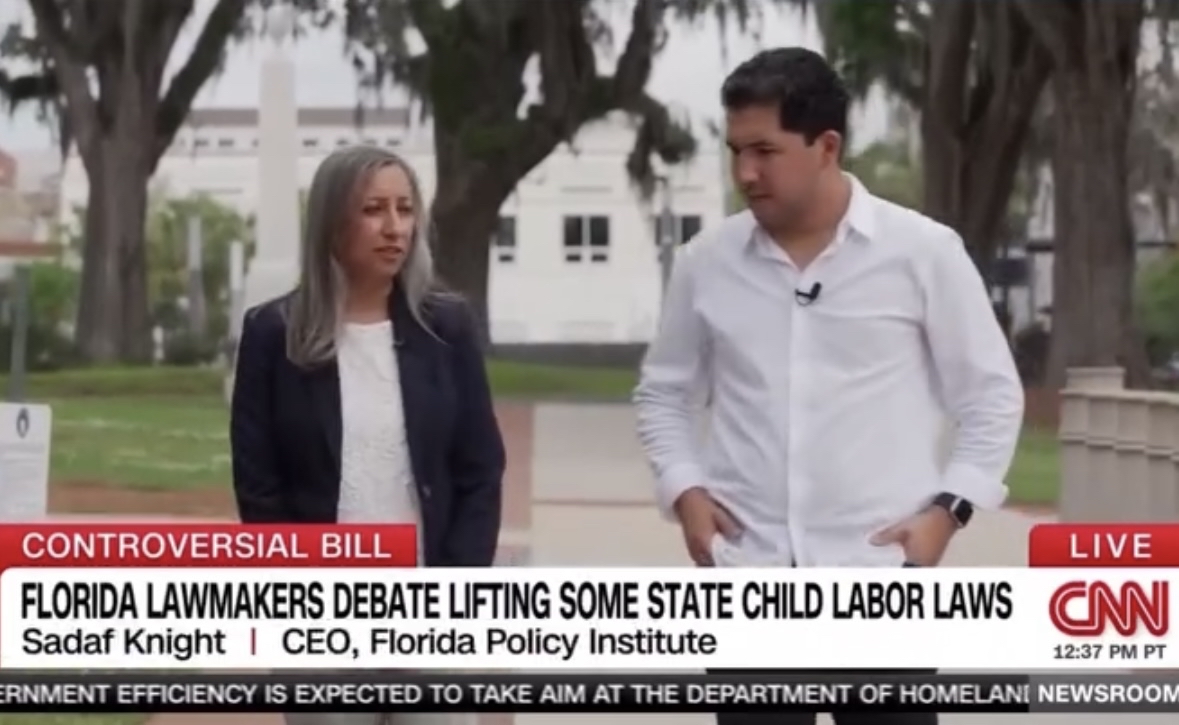
FPI’s work to maintain child labor protections included publishing and disseminating an analysis on how many teens could be at risk if the legislation was enacted, providing testimony before the Legislature, and encouraging residents to contact their state lawmakers in opposition to the bill.
FPI’s research was featured in dozens of news outlets statewide and nationally — including the Tampa Bay Times, The Guardian, NPR’s Marketplace, and CNN.
FPI continued working with partners in 2025 to support tax code reforms — policies that would provide targeted tax relief to those who need it most while ensuring that corporations and Floridians with high income pay their share. FPI also examined the risks associated with proposals introduced (in advance of the 2026 legislative session) to cut or eliminate property taxes, which — as the organization has stated — have so far been one-size-fits-all solutions that all would benefit the wealthiest residents.
FPI has been the lead voice in analyzing and providing context for proposals to cut or eliminate property taxes — moves that, as FPI’s research shows, would put critical local services like waste management, emergency services, and more at risk.
FPI’s research on various property tax reforms that have been floated by lawmakers — including total elimination and elimination of homestead property taxes only — have garnered widespread media coverage, including citations in Kiplinger, Newsweek, and the Florida Phoenix, and on WFTV, FOX 13, Bay News 9, Fox Business, and WUSF. FPI’s research on property tax reform was also cited in editorials published in the Miami Herald, Sun Sentinel, Orlando Sentinel, and Citrus County Chronicle.
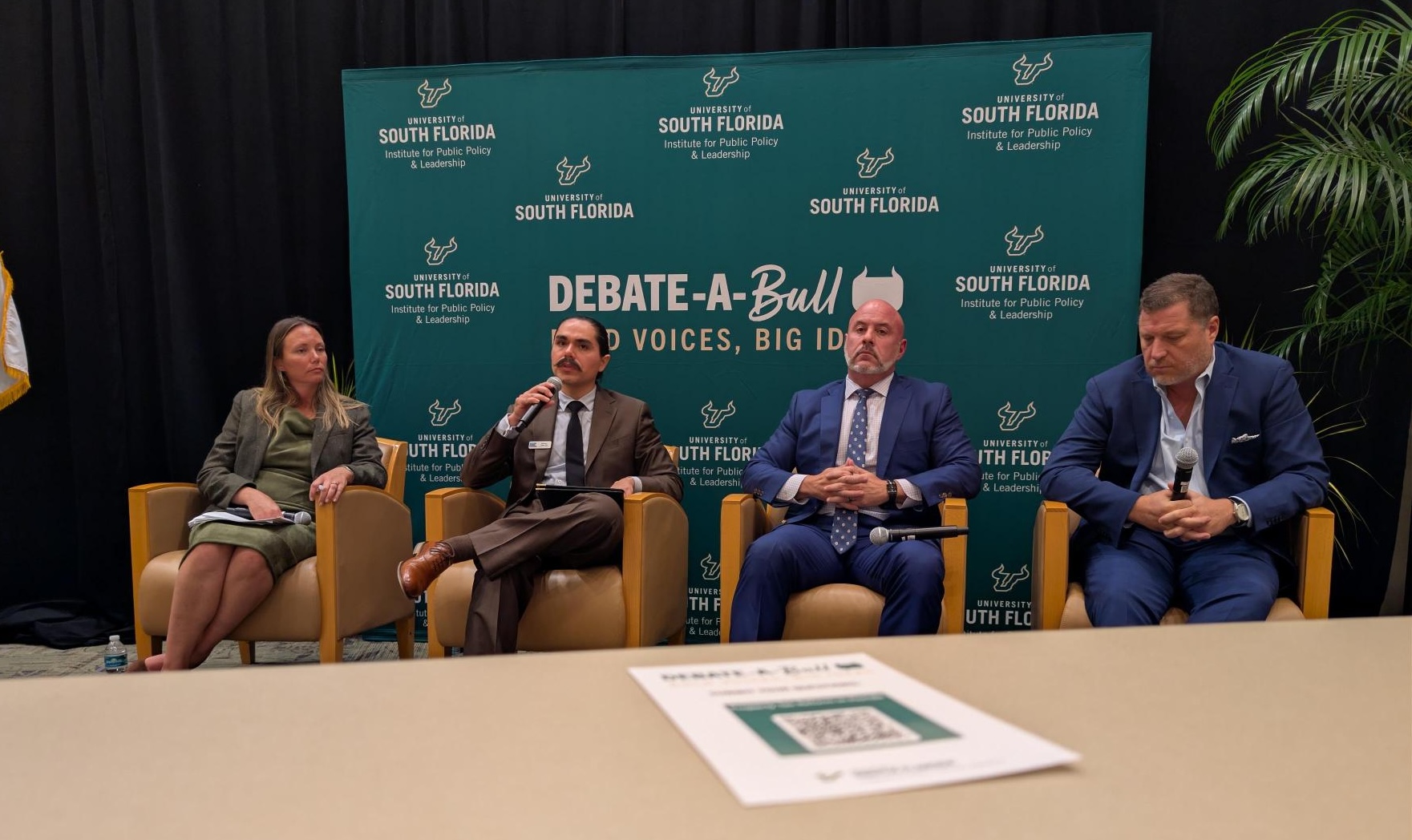
On Nov. 15, FPI participated in a conversation on property tax reform as part of the University of South Florida’s (USF’s) “debate-a-bull” speaker series, alongside the Florida CFO and other state-based think tanks.
In 2026, FPI will continue publishing analyses on property tax reform proposals.
In 2025, FPI worked to spread awareness on the benefits of creating the Working Floridians Tax Rebate (WFTR), a state-version of the federal earned income tax credit (EITC), which would provide an annual boost for low- to moderate-income households. Bills that would create a WFTR were introduced in both the Florida House and the Florida Senate.
In an op-ed for Bloomberg Tax, FPI wrote: “If lawmakers want to offer tax relief, they should also consider options that are targeted to those who need it the most. For example, there is a proposal in the House (HB 1331) and Senate (SB 1158) to create a state version of the federal earned income tax credit, known as the Working Floridians Tax Rebate program, which would be targeted to Floridians earning low- to moderate-income.”
In 2026, FPI will continue prompting the WFTR and educating state lawmakers on the importance of making the tax code fairer for everyday Floridians.
Investment in quality public education is a staple of thriving communities.
FPI is a member of the Florida Coalition for Thriving Public Schools, a state education advocacy coalition which also includes Florida Education Association, P.S. 305, Florida Freedom to Read Project, and Pastors for Florida Children. FPI and partners have called for greater oversight of state spending on private school vouchers and highlighted the negative impact of the state’s universal voucher law on public school families.
FPI was an early critic of the state’s universal voucher program since it was first proposed in advance of the 2023 legislative session.
In a January 2025 report, FPI and the ELC pointed out that universal vouchers cost Florida nearly $4 billion in FY 2024-25, as the organizations had originally predicted. The report also included local-level data showing the proportion of state aid by county being diverted to Family Empowerment Scholarship vouchers.
Additionally, in November 2025, Florida’s auditor general released a scathing report on the universal voucher program that confirmed what FPI and its partners had been warning state lawmakers and the Florida Department of Education about since the program’s inception —- namely, that the program severely lacks guardrails to ensure accountability and transparency.
As 2025 draws to a close, estimated expenditures will be $4.9 billion from the Family Empowerment Scholarships, paid from Florida's general revenue for K-12 schools and the Florida Tax Credit Scholarships.
Additionally, in November 2025, Florida’s auditor general released a scathing report on the universal voucher program that confirmed what FPI and its partners had been warning state lawmakers and the Florida Department of Education about since the program’s inception —- namely, that the program severely lacks guardrails to ensure accountability and transparency.
There have been bills introduced in advance of the 2026 legislative session that include some of the recommendations supported by FPI and partners, including improving state oversight of the program.
FPI and partner organizations in the Florida Coalition for Thriving Public Schools also sounded the alarm on a recent, sweeping expansion of the number of public schools eligible for partial takeover by “Schools of Hope” charter operators, which was made possible by a provision inserted into the FY 2025-26 budget bill during the final hours of negotiation. The coalition has called attention to the number of letters of intent charter school operators looking to claim seats in public schools have sent to school districts in Florida and has recommended a repeal of the 2025 law.
FPI strongly opposed House Resolution (H.R. 1), the federal reconciliation bill signed into law on July 4, pointing out the legislation’s unprecedented cuts to Medicaid and the Supplemental Nutrition Assistance Program (SNAP); lawmakers’ failure to extend enhanced premium tax credits; the extension of trillions in tax cuts, skewed to the wealthiest Americans; the cuts to climate and clean energy investment programs; and the creation of a federal voucher program.
FPI worked vigorously through its Safety Net Advocacy Coalition (SNAC), a coalition made up of 89 nonprofits, health advocacy groups, food banks, legal aid services, faith groups, and others committed to preserving the health and livelihood of families struggling to get by on low income, to spread awareness on H.R. 1’s provisions.
FPI published 11 blog posts over the course of 2025 on how Floridians would be impacted by H.R. 1, including one that contained an interactive map of county-level participation in SNAP and Medicaid. FPI also hosted and participated in several press conferences with partner groups to call attention to potential statewide and local impacts of H.R. 1.
Notably, FPI, Florida Impact, and Florida Voices for Health hosted an in-person town hall meeting in March 2025 to discuss what were then-proposed federal cuts to food and health care assistance programs, what they would mean for everyday Floridians, and how community members could get involved to defend the programs. The town hall meeting, held at a church in Davenport, featured a panel discussion and Q&A session with local residents.
FPI also created an Action Network page so that Floridians could urge federal lawmakers to reject H.R. 1’s cuts to health care and food assistance. Over 1,000 letters were sent to representatives.
In October 2025, FPI updated The Florida Timeline to include a focus on housing policy, including barriers that have resulted in the displacement of Black Floridians and have also made affordable homeownership and accessibility to safe housing out of reach for many.
The Florida Timeline is FPI’s ongoing initiative that draws awareness to the systemic racism that has historically permeated through laws in Florida. The timeline connects historically inequitable policies to present-day harm and demonstrates how policies that center racial justice have a shared, positive impact for all Floridians. The timeline, which was launched in October 2022, also shows key historical information from criminal justice, education, food security, tax policy, and worker justice.
FPI hosted a webinar on the housing-policy area of The Florida Timeline as well, and was joined by a speaker from Miami Homes For All, who addressed Miami-Dade’s unique approaches to addressing homelessness and affordable housing development.
In 2023, FPI and partners successfully advocated against the repeal of Florida’s 2014 in-state tuition law for undocumented immigrants. However, in 2025, the Legislature held several special sessions on immigration issues, which included a full repeal of this inclusive policy.
Nevertheless, FPI was able to quickly analyze, publish, and disseminate research showing that eliminating out-of-state waivers for Dreamers would result in Florida’s institutions, as a whole, losing out on nearly $15 million in tuition and fees. FPI’s findings served as a counternarrative to how some state lawmakers had framed the fiscal impact of these waivers.
The research generated by FPI was cited by numerous state legislators and featured in a PolitiFact article that rated claims the waivers were costing the state money as “mostly false.”
Although the legislation ending in-state tuition waivers for Dreamers was signed into law, FPI’s research helped to dispel the idea that the proposal would save taxpayer dollars.
American Rescue Plan Act Changes. The American Rescue Plan Act of 2021 extended PEUC and PUA benefits through the week ending September 6, 2021. It also increased the maximum duration of PEUC benefits ($300 a week) to 53 weeks and the maximum duration of PUA to 79 weeks. Although PEUC and PUA did not end until September 6, 2021, Florida withdrew from the Federal Pandemic Unemployment Compensation Program (FPUC) effective June 26, 2021. FPUC provided persons who were out of work due to COVID-19 with an additional $300 a week in unemployment insurance.
Reemployment Assistance weeks reverted to 12 effective January 1, 2022. DEO determines the maximum number of weeks available to RA claimants based on a statutory formula that looks at the average unemployment rate for the most recent third calendar year quarter (i.e., July, August, and September). Based on the downturn in unemployment, the maximum number of weeks for RA reverted to 12 effective January 1, 2022.
RA work-search and work registration requirements reinstated on May 30, 2021. Persons filing an application for RA benefits beginning March 15, 2020, are not required to complete work registration in Employ Florida through May 29, 2021. In addition, work search requirements for individuals requesting benefits for the weeks beginning March 15, 2020, were also reinstated on May 30, 2021.
RA biweekly reporting requirements reinstated. Although previously waived, biweekly reporting was reinstated effective May 10, 2020. DEO’s guide to claiming weeks is here.
Mobile app deployed. DEO has deployed a mobile app for RA applications.
DEO announces extended benefits. DEO announced implementation of Extended Benefits (EB).
Resources and guidance. For a list of resources and guidance from the United States Department of Labor on unemployment insurance and COVID-19, go here.
For DEO’s “Reemployment Assistance Frequently Asked Questions and Additional Resources,” updated 12/30/2020, go here.
For DEO’s latest claims data, go here.
DCF opens offices. DCF has reopened its brick-and-mortar storefronts, which were previously closed due to coronavirus.
DCF adds call center numbers. DCF has added a call center number for Monday through Friday, from 7 a.m. to 6 p.m. Call center numbers now include 850-300-4323, 866-762-2237, or TTY 1-800-955-8771.
Certification periods extended by 6 months only through August 2020. Certification periods for cash, food and medical assistance were extended by 6 months for individuals and families scheduled to recertify in April through August 2020. FNS’ approval of the SNAP extension for August is here. However, effective September 1, 2020, SNAP, TANF and Medicaid recertifications have been reinstated, although DCF says that no one will lose Medicaid due to recertification.
DCF allows phone interviews. Phone interviews are now being used for TANF cash and SNAP food assistance.
Mandatory work requirements suspended only through May 2021. Under a directive from Governor DeSantis to waive work requirements for safety net programs, DCF waived work requirements for individuals participating in the Supplemental Nutrition Assistance Program (SNAP) and Temporary Assistance for Needy Families (TANF) through May 2021. To do this, DCF explains that it partnered with the Department of Economic Opportunity to apply “good cause” statewide for TANF and SNAP recipients who would otherwise be subject to participation in mandatory work requirements as a condition of receiving those benefits. Through May 2021, persons who were sanctioned in the past due to work requirements will be able to reapply and participate in SNAP or TANF again.
Work requirements were reinstated effective June 1, 2021.
Emergency allotments (EA) ended. DCF automatically supplemented SNAP allotments of current recipients up to the maximum for a household’s size for July 2021. However, EA was discontinued beginning August 1, 2021.
The SNAP benefits increase by 15 percent ended in October 2021. Floridians who participate in SNAP to put food on the table will receive a temporary 15 percent supplement to SNAP under COVID relief passed by Congress and extended by the American Rescue Plan Act through September 2021.
FNS permanently increases SNAP through revamp of the Thrifty Food Plan. Effective October 2021, FNS has mandated a permanent increase to SNAP through a revamp of the Thrifty Food Plan. DCF says that the increase amounts to about 6% for Floridians.
Time limits suspended. SNAP time limits are suspended during the COVID-19 public health emergency. No one in Florida should be barred from SNAP due to time limits, even if they exhausted their time limit in the past.
Florida granted waiver to allow families to purchase groceries online. DCF has been granted a federal waiver to permit the State of Florida to launch a pilot project statewide effective April 21, 2020, that allows families to purchase groceries online with their Electronic Benefit Transfer (EBT) card instead of going into stores.
No Medicaid terminations from March 2020 through the end of the federal public health emergency. The national public health emergency has existed since January 27, 2020 and has been renewed by the Secretary of the U.S. Department of Health & Human Services in 90-day increments since that time. The most recent renewal is effective January 16, 2022.
On March 31, 2020, AHCA alerted providers and DCF posted on the ACCESS website that:
Redetermination/recertification times are reinstated. As of October 1, 2020 AHCA's website is alerting recipients that the Department of Children and Families is now mailing letters for case reviews to check if a household is still eligible for Medicaid and/or Medically Needy. AHCA is urging people receiving these letters to take steps now to re-apply. But note, Medicaid coverage will not end during the COVID-19 Public Health Emergency. In January 2021 DCF conducted one-year “automated renewals” for people whose sole income is social security and SSI and are enrolled in an SSI-related Medicaid program (e.g., MEDS/AD, Medically Needy and Medicare Savings Programs). People getting VA income were not included in the automated renewal.
Extended application time. Effective with applications filed in February 2020, the time for submitting documentation required to process an application is extended for 120 days from the date of the application and eligibility will still be effective the first day of the month the application was received. Effective July 1, 2021, this policy has been rescinded. Medicaid applications submitted on or after July 1, 2021 may be denied on the 30th day after application or the day after verification information is due. Applications filed prior to July 1, will be allowed 120 days to provide requested verification to establish Medicaid eligibility.
Exclusion of additional unemployment payments in determining eligibility. The $600/week of additional unemployment insurance payments under the CARES Act will not be counted as income in determining Medicaid eligibility. (However, these payments will be counted as income in determining marketplace subsidy calculations.)
Coverage of Medicaid services during the state of emergency
COVID-19 Vaccines for Medicaid Enrollees. In an executive order published March 16, 2021 Governor DeSantis revised the vaccine distribution plan, which applies to the general public including Medicaid enrollees, to lower the age requirement to 40 effective March 29, 2021 and then effective April 5, 2021 all Floridians are eligible to receive any COVID-19 vaccination approved by the Food and Drug Administration.
Medicaid enrollees eligible to receive the vaccine may visit myvaccine.fl.gov to find a location distributing the vaccine and to schedule an appointment.
On March 12, 2021, AHCA published instructions for Medicaid enrollees on how to obtain Medicaid transportation once they have scheduled an appointment for a vaccine. AHCA states: "Florida Medicaid will take you to get the COVID-19 vaccine at no cost. All you need to do is set up a time to get your vaccine. Next, let your Medicaid plan know you need a ride and they will take care of the rest. If you are not enrolled in a plan, call the Medicaid Helpline at 1-877-254-1055 to find out the name and phone number for a transportation service."
The state has also recently launched a new email system to help bring COVID-19 vaccines to homebound seniors. Seniors will be able to sign up to have the vaccine come to them by emailing a request to HomeboundVaccine@em.myflorida.com.
AHCA has posted Medicaid Alerts and FAQs providing more detail on Medicaid service changes in response to COVID-19. They address a wide range of topics including, but not limited to: telemedicine guidance for medical, behavioral health, and early intervention services providers; long-term care provider network flexibilities allowing more types of providers to deliver specified long term care services; and continuity of care for adult day care center enrollees during the time these centers are closed.
AHCA is loosening coverage restrictions for behavioral health services. Effective May 5, 2020, all prior authorization requirements for mental health or substance use disorder treatment are waived and service limitations (frequency and duration) are lifted. For behavioral analysis services, current authorizations will be extended through an "administrative approval process" which does not require providers to reassess beneficiaries currently getting services. Effective July 1, 2021 service limits will be reinstated for behavioral health services and effective July 15, 2021 Medicaid prior authorization requirements will be reinstated for behavioral health services.
Per a May 29, 2020 provider alert, during the state of emergency AHCA will be reimbursing providers for telemedicine well-child visits provided to children older than 24 months through age 20. Providers are directed to actively work to schedule follow-up in-person visits to administer immunizations and other physical components of the exam which cannot be accomplished through telemedicine.
Coverage of home and community-based waiver services (HCBS) - In response to the public emergency, Florida obtained approval from the federal government to make changes in HCBS waiver programs, including the Long Term Care and Developmental Disabilities programs. The changes are effective retroactively from January 27, 2020 to January 26, 2021. Details can be found here. They include, but are not limited to:
Note on COVID-19 testing, treatment, and vaccines for the uninsured. Florida has not opted to receive 100 percent federal Medicaid funding for COVID-19 testing of people without health insurance. Under the 2021 American Rescue Plan Act this option has been expanded to cover COVID-19 treatment and vaccines for the uninsured as well. Since the state has not taken up this option Floridians must look to an uneven patchwork of free testing, treatment, and vaccine resources scattered around the state. AHCA advises that uninsured people may receive free testing from their county health department or a federally qualified health center and that “many communities provide testing for free for individuals who do not have insurance. Please [click here] to find a test site in your area. Uninsured individuals should ask before the test whether testing is free of charge." There are no state agency instructions on where uninsured people can receive free treatment. However, more information on possible sources for free treatment is available here.
Residency proof no longer required at some vaccine sites, “paving the way for migrants.” - On April 29, 2021 Surgeon General Rivkees issued a new public health advisory specifying that COVID-19 vaccines are available to “a Florida resident” or someone “who is present in Florida for the purpose of providing goods or services for the benefits of residents and visitors of the State of Florida.” This new policy applies to all state-run and federally supported vaccination sites. It rescinds an advisory issued in January that had restricted vaccinations to people who could show proof of Florida residency
2021 unemployment compensation claimants can access free or reduced cost health insurance through the ACA marketplace. The Affordable Care Act (ACA) Marketplace was re-opened in February 2021 to give people who need health insurance a new “special enrollment" opportunity to get covered. The 2021 American Rescue Plan eliminated or vastly reduced premiums for many people with low or moderate incomes.
Starting July 1, 2021, people who received or have been approved for unemployment compensation for any week beginning in 2021 can access free or reduced cost comprehensive health insurance plans through the ACA marketplace. This benefit is available regardless of someone's current income. To get this benefit, people must enroll in the marketplace no later than August 15, 2021. For help with enrollment, contact Covering Florida at 877-813-9115.
School children in distance learning still eligible for free or reduced cost meals. Students in distance learning for 2020-21 can still receive school meals through the National School Lunch Program if they are eligible. The student or parent/guardian may pick up meals at the school but should contact their school for more information.
For a list of current child nutrition program waivers for Florida from USDA, go here.
Congress allows increased fruit and vegetable benefits. At present, WIC provides $9 for children and $11 for women monthly for fruits and vegetables. The American Rescue Plan Act makes funding available for a four-month increase in the benefit of up to $35 monthly, if a state chooses to do so.
DOH attains waiver allowing remote issuance: Department of Health (DOH) obtained a waiver of the requirement that participants pick up their EBT cards in person at recertification or during nutritional education appointments.
WIC participants allowed to substitute certain food. Under a waiver from USDA, WIC participants in Florida are allowed to substitute milk of any available fat content and whole wheat or whole grain bread in package sizes up to 24 oz. when 16 oz. packages are unavailable.
USDA waived physical presence requirements: Although the scope and logistics are unclear at this time, USDA has given DOH permission to waive the requirement that persons be physically present at each certification or recertification determination in order to determine eligibility under the program through May 31, 2020.
USDA extends certification periods through May 31, 2020, for some participants.
For a list of current WIC waivers for Florida from USDA, go here.
HHS provides guidance. HHS has issued guidance on the flexibilities in TANF to respond to COVID-19.